Agronomic Intelligence
Beyond the sweetness lies the science of the soil. Explore the data, regional footprints, and unique coastal microclimates that shape India’s mango industry, and discover the agricultural reality behind the world’s finest Ratnagiri Alphonso
The Undisputed King of Cultivation
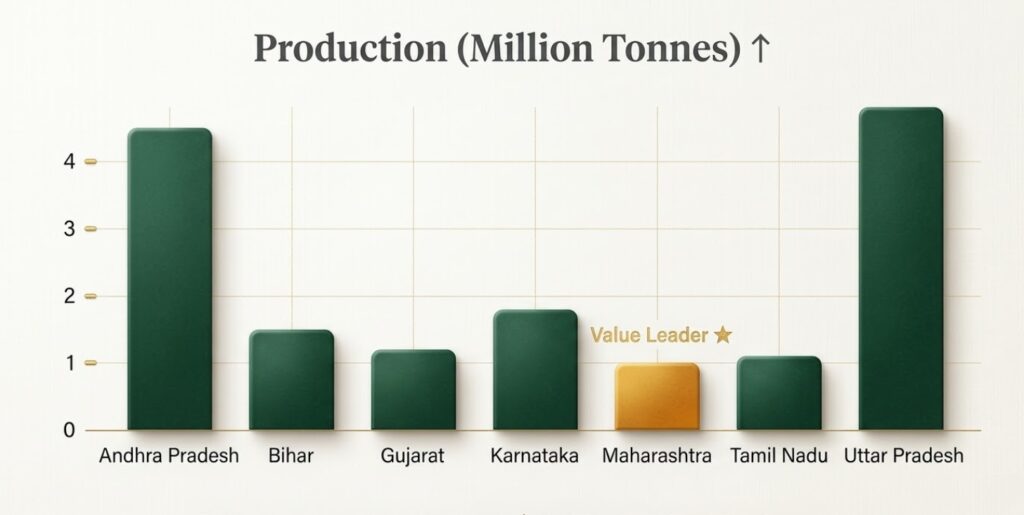
When the world thinks of mangoes, it thinks of India. As the undisputed global heavyweight of mango cultivation, India produces over 20 million metric tonnes annually. To put that scale into perspective, the Indian agricultural sector single-handedly commands nearly 50% of the world’s entire mango supply. From the northern plains of Uttar Pradesh to the southern orchards of Tamil Nadu, it is an agricultural marvel of sheer volume.
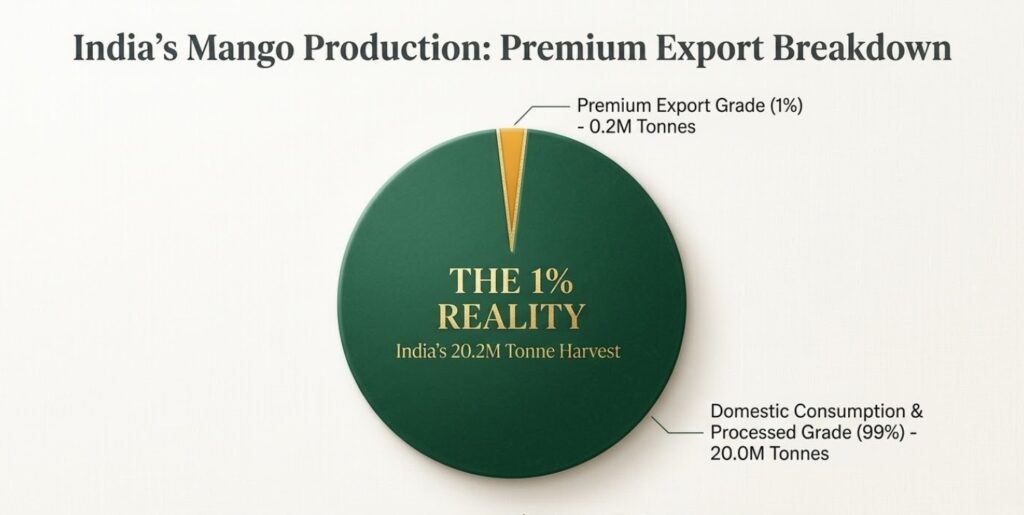
The 1% Reality: Volume vs. Value
However, in agronomy, immense volume rarely equates to absolute perfection. Despite this staggering national output, a surprisingly small fraction—less than 1%—actually meets the rigorous, unyielding standards of premium, export-grade fruit. The vast majority of India’s 20-million-tonne harvest is treated as a commercial commodity, destined for local mass consumption, industrial pulping, purees, and concentrates.
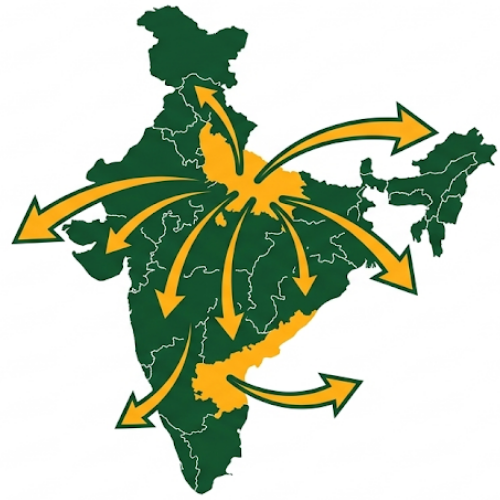
The Indian Mango Footprint

The Supply Engines
States like Uttar Pradesh and Andhra Pradesh dominate the national agricultural map in sheer volume.

High-Yield Varieties
These regions cultivate resilient, mass-producing varieties such as Dashehari, Langra, Banganapalli, and Totapuri.

Market Purpose
Optimized for maximum tonnage to fulfill immense daily domestic consumption and industrial pulping demands.