
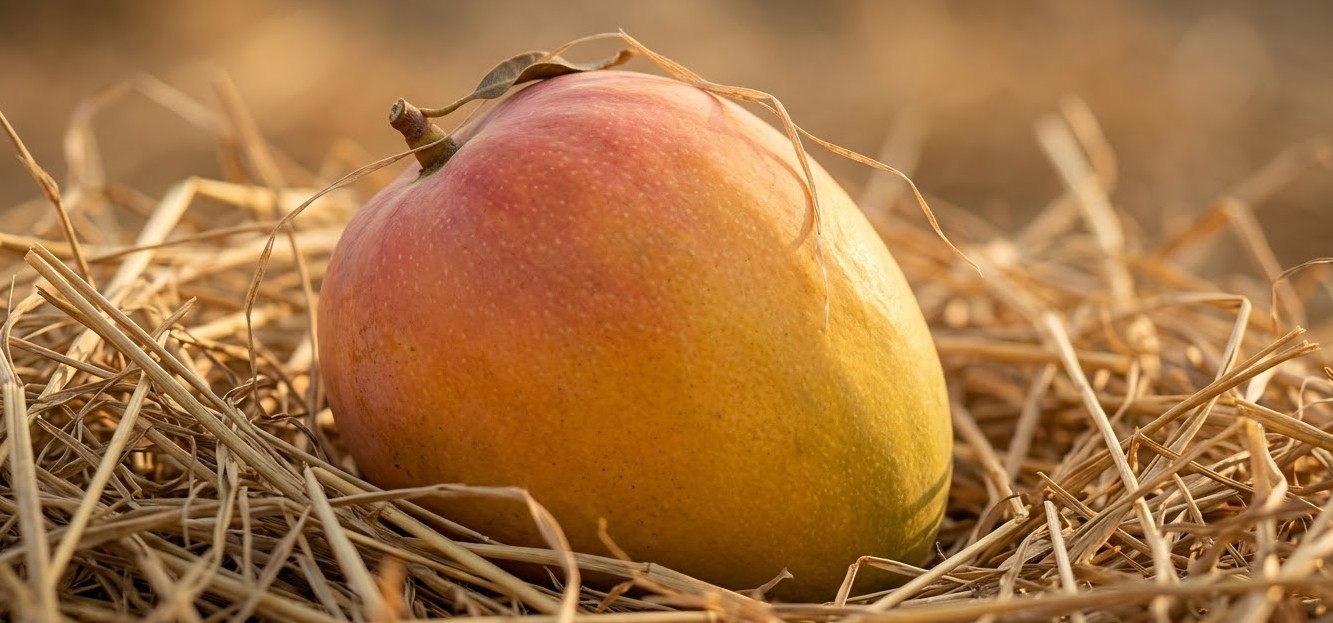
Every summer, connoisseurs eagerly await the arrival of the King of Fruits. Yet, as the season peaks, the market inevitably floods with clever imposters. If you are wondering how to identify original Alphonso mangoes from fake, you are certainly not alone in your frustration.
It is a common struggle for buyers who simply want to enjoy the legendary sweetness of the true Hapus. Sadly, chemically ripened lookalikes from other regions are frequently passed off as the real deal to unsuspecting buyers.
At Fantastic Mangoes, our hands are deeply familiar with the rich, red lateritic soil of our orchards. We spend our days cultivating the land, nurturing the trees, and protecting the legacy of authentic coastal farming. Because we grow them ourselves, we know exactly what makes a true Alphonso spectacular. Today, we are sharing our orchard-to-table expertise so you never get duped again.
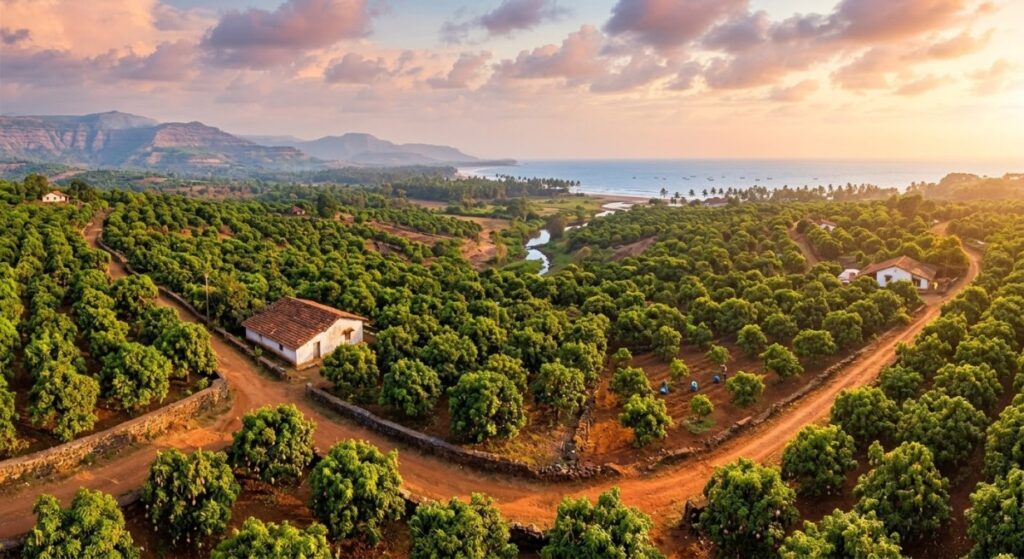
Before you can spot a fake, you must understand what makes the original so extraordinary. The true magic of the Alphonso does not just come from the seed; it comes from the earth.
The authentic Konkan coast mangoes draw their unique flavor profile from a very specific geographic phenomenon. The rugged terrain, the highly porous volcanic soil, and the salty, humid sea breeze of the Arabian Sea create the perfect storm for mango cultivation.
This specific terroir is what gives the legendary Ratnagiri Alphonso and the highly coveted Devgad Hapus their mesmerizing aroma, buttery texture, and saffron-colored pulp. When a mango is grown outside of this narrow coastal belt, even if it is technically the same breed, it simply will not develop the same complex flavor or scent. It is just a copy missing its soul.
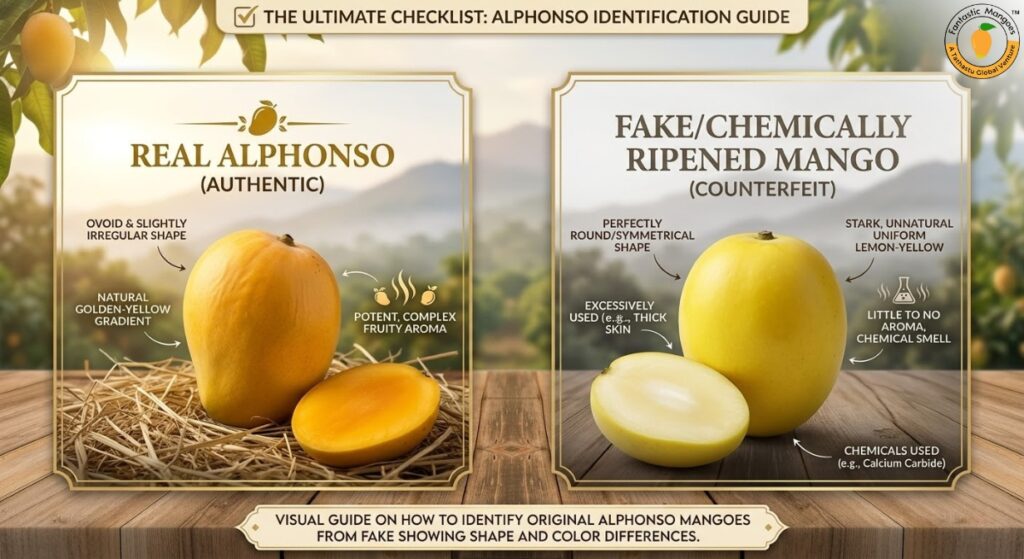
Search engines love quick, actionable answers. If you are standing in a market or examining a delivery, use this quick checklist.
Here are the key indicators to look for:
Let’s dive deeper into each of these sensory tests.
The most reliable way to tell a real Alphonso from a fake is through your sense of smell. You should not have to press the fruit against your nose to smell it.
A genuine, naturally ripened Alphonso will emit a distinct, sweet, and intoxicating aroma that can literally fill a room. The scent profile is complex, often carrying subtle notes of apricot, melon, and citrus. If the mango has no smell, or if it smells faintly metallic or chemical, put it back.
Imposter mangoes are often perfectly round or excessively elongated. The true Alphonso has a very distinct, slightly irregular shape.
It is generally ovoid and oblique. If you look closely, you will notice that it does not have a pronounced beak (the pointy tip at the bottom) like a Totapuri mango. Instead, it has a gentle, rounded curve. It should sit comfortably and weightily in the palm of your hand.
A perfectly uniform, bright yellow mango might look beautiful on a supermarket shelf, but it is often a major red flag. Nature is rarely uniform.
True chemical-free ripening results in a beautiful, natural gradient. A genuine Alphonso will often display a mix of rich golden-yellow and saffron hues, sometimes with a slight green tinge near the stem even when it is fully ripe to eat.
Fakes that have been artificially ripened with calcium carbide will usually have a stark, unnatural, and completely uniform lemon-yellow skin. Worse, they might look perfectly ripe on the outside but remain hard, tart, and white on the inside.
The skin of an authentic Alphonso is incredibly thin and delicate. As it reaches its peak ripeness, the skin may develop very fine, subtle wrinkles.
These tiny wrinkles are actually a wonderful sign! They indicate that the fruit has lost a bit of water weight and the sugars inside have concentrated, meaning it will be exceptionally sweet. Artificially ripened fakes will usually have unnaturally smooth, thick, and taut skin that feels somewhat rubbery to the touch.
In recent years, the Indian government recognized the unique heritage of these coastal mangoes by awarding them a Geographical Indication (GI) tag.
GI tag mangoes are legally certified to have been grown in the specific designated districts of the Konkan region, such as Ratnagiri, Sindhudurg, and Raigad. This tag acts as a seal of authenticity and a promise of quality.
When you are looking to Buy premium Indian mangoes online, always look for vendors who can trace their produce back to these specific GI-certified regions. Transparency is the ultimate enemy of the counterfeit mango trade.
Identifying the real deal takes practice, patience, and a keen eye. However, the easiest way to guarantee you are getting an authentic experience is to buy directly from the farmers who tend the orchards.
When you purchase from a dedicated grower, you bypass the murky supply chains where local varieties are secretly swapped and chemically treated. You ensure that your fruit has been hand-harvested at the exact right time, packed in natural hay, and allowed to ripen the way nature intended.
The King of Mangoes deserves respect, and so does your palate. Do not settle for imposters this season. Experience the profound difference that genuine coastal heritage makes in every single bite.
Ready to taste the real difference? Stop gambling with imposters at the local market. Visit the Fantastic Mangoes Shop today to order your box of guaranteed authentic, farm-fresh Alphonso mangoes, delivered straight from our Konkan orchards to your door.
Why just buy mangoes, when you can own the entire farm? – Learn more at konkanestates.com now!