India’s Mango Varieties: The Complete State-by-State Guide for 2026
India doesn’t just grow mangoes — it breathes them. With over 22 million metric tonnes produced annually, India accounts for nearly half of the entire
Pre-orders for 2027 now open
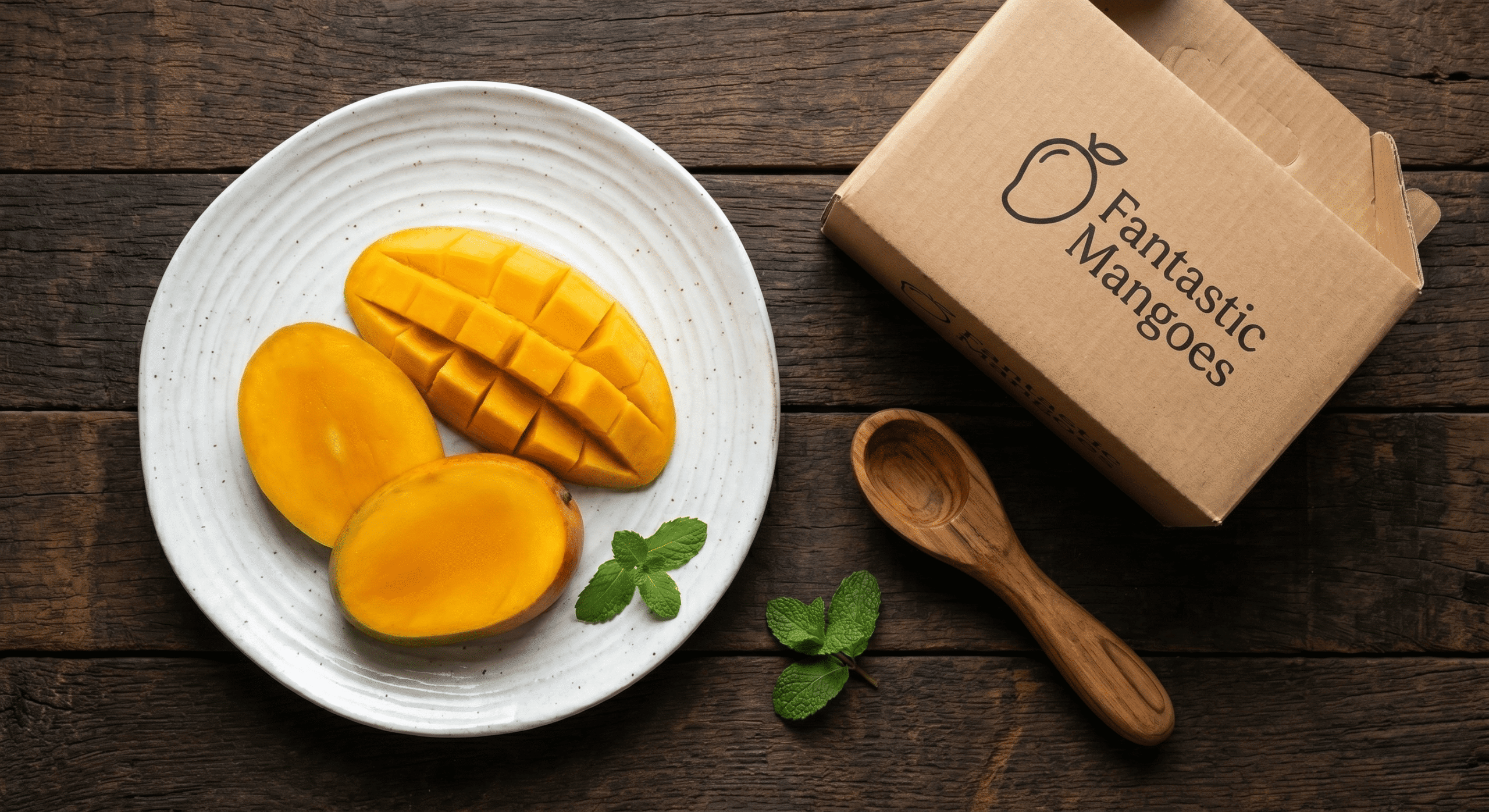
When you purchase premium fruit, you are buying more than just produce; you are participating in a complex agricultural economy. For decades, the global supply chain has prioritized volume and cheap logistics over the well-being of the people who actually tend the soil. At Fantastic Mangoes, fair trade agriculture is not a marketing slogan tucked into the corner of a brochure. It is the foundational architecture of our operations, built on a forty-year legacy in the agricultural sector.
Here is a data-driven look at why standard agricultural supply chains are broken, and how a direct-to-consumer (D2C) model changes the economic reality for our farming communities across the Konkan region.
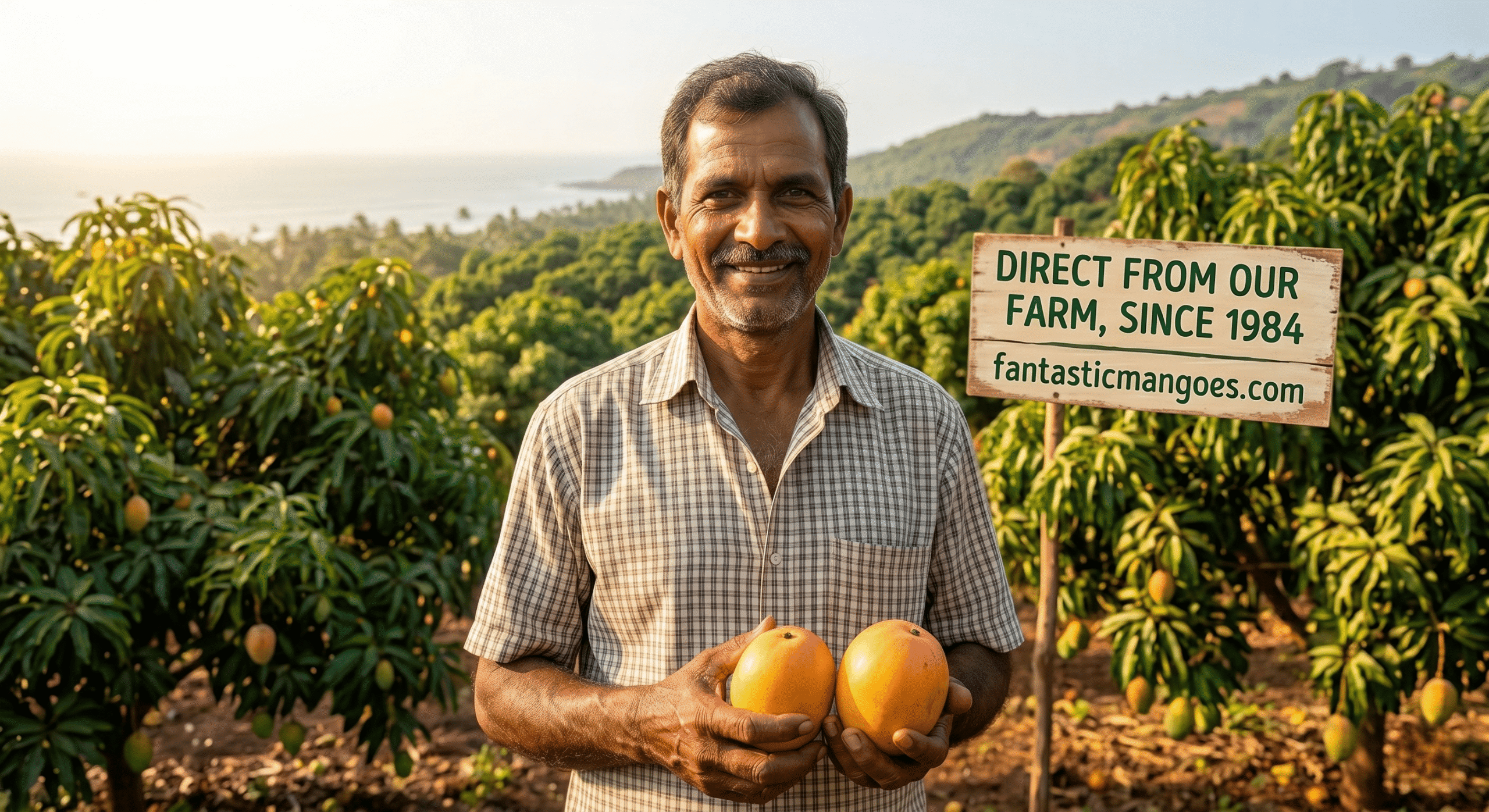
To understand the necessity of fair trade, one must look at the traditional path from orchard to table. Historically, the Indian agricultural market relies heavily on a fragmented network of intermediaries. A typical supply chain looks like this:
Producer → Pre-Harvest Contractor → Commission Agent/Wholesaler → Retailer → Consumer
Research into Indian fruit marketing channels demonstrates a harsh economic reality, underscoring exactly why fair trade agriculture is so vital today. In a multi-tiered supply chain, the producer’s share of the consumer’s rupee can plummet to as low as 37% to 50%. The majority of the margin is absorbed by middlemen who do not participate in the cultivation, risk management, or harvesting of the crop.
Pre-harvest contractors often lease orchards months in advance, locking smallholder farmers into fixed, low-yield contracts that insulate the contractor from market fluctuations while keeping the farmer near the poverty line. By the time that fruit reaches major Indian metro cities, the consumer is paying a premium, but the financial benefit rarely makes it back to the grower.
The solution is structural. By establishing a robust Direct-to-Consumer (D2C) supply chain, Fantastic Mangoes bypasses the traditional labyrinth of commission agents and wholesalers.
Removing these intermediaries allows us to accomplish two vital financial objectives simultaneously:
When the supply chain is compressed, economic empowerment becomes a mathematical certainty rather than a corporate promise.
Fair compensation is only one metric of a healthy agricultural community. True ethical farming requires a comprehensive approach to human rights and environmental stewardship.
This is an absolute, non-negotiable pillar of our operations. The agricultural sector globally is one of the largest employers of underage workers. As advocates for genuine fair trade agriculture, we enforce strict compliance and auditing across our entire supply chain to ensure that every mango harvested for our brand is picked by a fairly compensated adult. We believe children belong in schools, not in orchards.
Modern consumers demand transparency. We maintain rigorous non-GMO traceability protocols, ensuring that our orchards cultivate authentic, heritage varieties. This protects the biodiversity of the Konkan region while providing our customers with a product that is genetically pure and safe.
The pressure to deliver fruit rapidly to market often leads to the dangerous practice of artificial ripening using calcium carbide—a chemical compound that can pose severe health risks. We rely strictly on natural ripening processes. While this requires more time, superior logistical planning, and a deep understanding of harvest timing, the result is a chemical-free product. Natural ripening not only ensures consumer safety but also develops the complex, superior flavor profile that defines a premium mango.
The Konkan region, with its unique microclimate of saltwater breezes and rich red soil, produces some of the finest horticultural assets in the world. However, preserving this terroir requires investing in the people who manage it.
Our forty-year connection to the soil has taught us that sustainable agriculture is impossible without sustainable livelihoods. When farmers are paid fairly, they do not have to resort to aggressive, yield-boosting chemical fertilizers that degrade the soil over time. They can afford to employ traditional, nature-positive farming techniques. They can invest in their communities, their infrastructure, and their future.
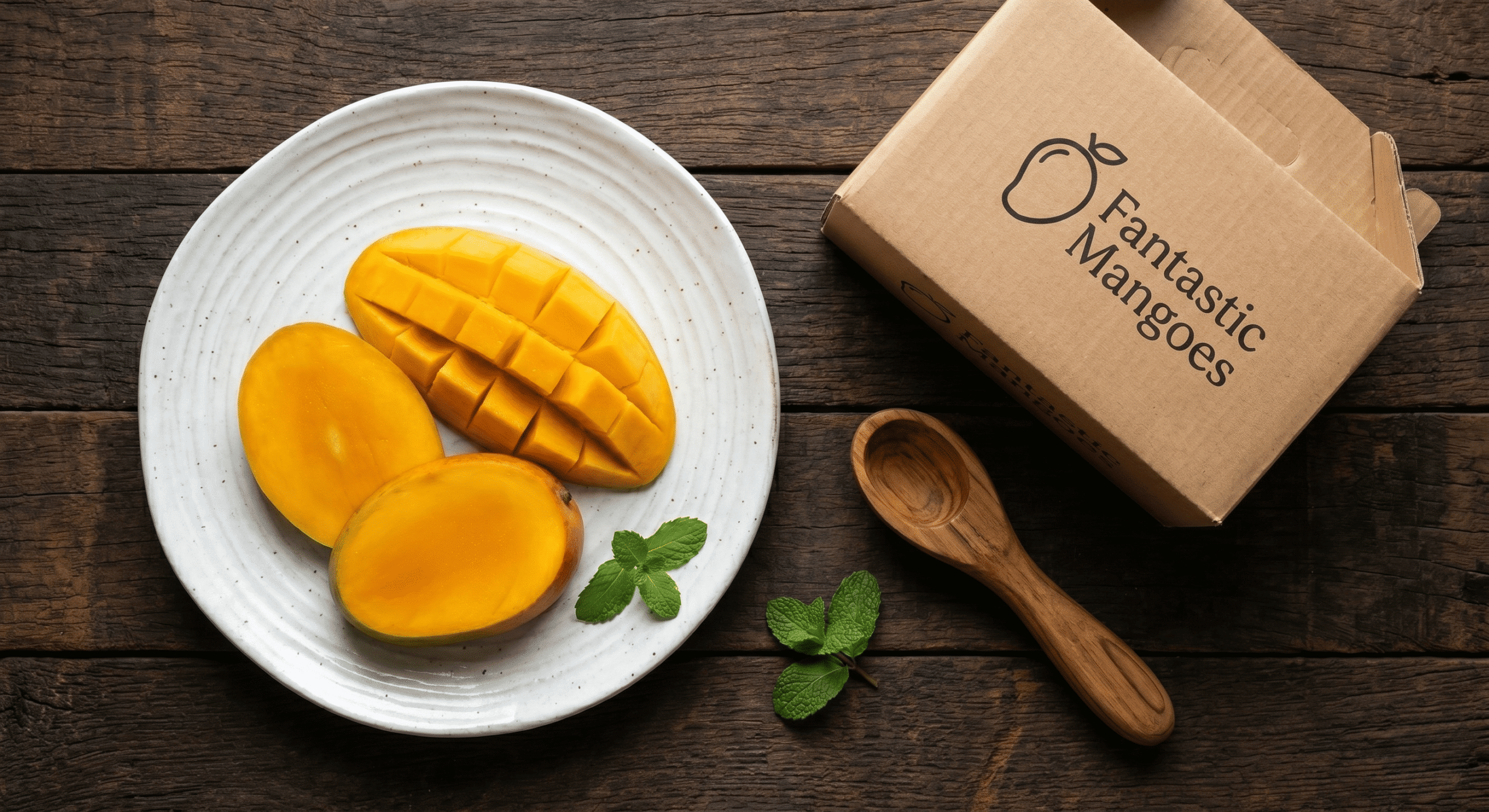
It is easy to package a product in a minimalist, sophisticated box. It is entirely different to ensure that the elegance of the brand reflects the integrity of its origins.x
When you choose Fantastic Mangoes, you are casting a vote for an ethical supply chain. You are supporting zero child labor, demanding non-GMO traceability, and insisting on carbide-free cultivation. Most importantly, you are proving that a premium, direct-to-consumer model can fundamentally change the lives of the farmers who bring the harvest to our tables.
Fair trade is the cost of doing business right. And it is a cost we proudly bear.
India doesn’t just grow mangoes — it breathes them. With over 22 million metric tonnes produced annually, India accounts for nearly half of the entire
Biting into a ripe, sweet mango often feels lucky. However, a highly structured process actually creates that incredible flavor. At Fantastic Mangoes, we know great
A new entry in The Mango Diaries Every summer, the global market is flooded with fruits bearing the prestigious ‘Alphonso’ label. They arrive from various

Geography Defines Quality The foundation of exceptional Alphonso mangoes lies in the Ratnagiri and Rajapur belts of Konkan. These regions offer a precise combination of: